
Meghan’s Reported Desire for a Home Inside Windsor Castle Sparked Early Royal Tensions After Nottingham Cottage Failed to Meet Expectations
The housing arrangements provided to members of the British royal family have often attracted public interest, particularly when they involve prominent figures. One topic that has resurfaced in recent discussions concerns reports about Meghan Markle’s alleged preference for a residence within Windsor Castle during the early period of her marriage to Prince Harry.
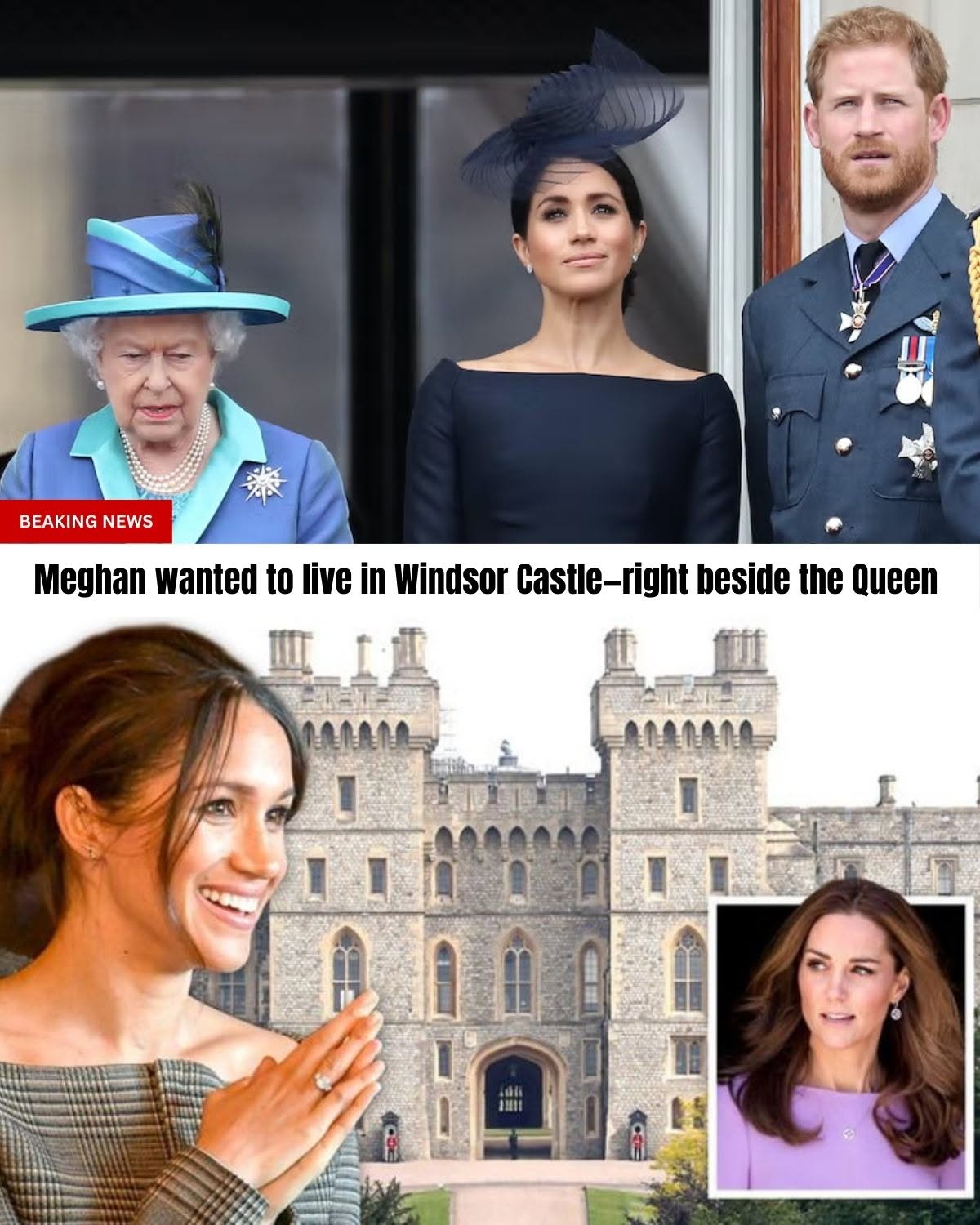
The discussion stems from accounts published in books, media reports, and commentary from royal observers over recent years. According to these reports, Meghan and Harry initially lived at Nottingham Cottage, a residence located within the grounds of Kensington Palace that had previously served as the first marital home of Prince William and Catherine, Princess of Wales.
Nottingham Cottage has long been regarded as a historically significant royal residence despite its relatively modest size compared with larger royal properties. The cottage gained international attention when Prince Harry lived there before his marriage and later shared the home with Meghan during the early months of their married life.
Reports published by various media outlets have suggested that Meghan may have hoped for accommodations that offered more space and privacy. Some accounts claimed that discussions surrounding housing arrangements became a source of disagreement or disappointment during the couple’s transition into royal life.
It is important to note that details regarding private conversations and personal preferences have not been comprehensively confirmed through official statements from Buckingham Palace. As a result, many aspects of these reports remain based on accounts from authors, commentators, and unnamed sources rather than direct public confirmation.
Public interest in the issue increased after excerpts from royal biographies and media reports suggested that Meghan had expressed interest in living closer to Windsor Castle. These reports were widely discussed because Windsor Castle has traditionally been associated with senior members of the royal family and significant royal events.
According to published accounts, the idea of residing within the Windsor estate was viewed by some observers as a practical consideration linked to privacy and security. Others interpreted the reports as evidence of differing expectations regarding royal accommodations and lifestyle arrangements after marriage.
The conversation surrounding royal residences reflects a broader fascination with the traditions and logistics of royal life. Housing assignments within the monarchy are often influenced by a combination of historical precedent, availability, security requirements, and the responsibilities associated with specific royal roles.
When Prince Harry and Meghan married in 2018, public attention surrounding the couple was exceptionally high. Their wedding attracted a global audience, and interest in their future plans extended to virtually every aspect of their lives, including where they would establish their household.
At the time, Nottingham Cottage became the focus of considerable media coverage. The residence had previously housed Prince William and Catherine during the early years of their marriage, leading many commentators to view the arrangement as a continuation of established royal practice.
Despite its historical significance, Nottingham Cottage has frequently been described as smaller than many royal residences. Media reports often highlighted its limited size, which contributed to ongoing speculation about whether the property met the long-term needs of the Sussexes following their marriage.

Royal commentators have noted that expectations regarding living arrangements can vary significantly depending on individual circumstances. Newly married couples often consider factors such as privacy, workspace requirements, family planning, and proximity to professional commitments when evaluating housing options.
As public interest in the Sussexes grew, reports concerning their living situation became part of a broader narrative about their adaptation to royal life. Observers frequently analyzed whether the couple’s experiences aligned with established traditions or reflected changing expectations within a modern monarchy.
The issue gained renewed attention when reports emerged suggesting that Meghan had hoped for a residence located within Windsor Castle itself. These claims generated significant debate among royal watchers, with differing interpretations regarding what such a request might have represented.
Some commentators argued that a preference for a larger or more private residence would not necessarily be unusual given the couple’s global profile. Increased public attention, media presence, and security considerations may naturally influence housing preferences for high-profile public figures.
Others suggested that comparisons with housing arrangements provided to other members of the royal family contributed to public discussion. The allocation of royal residences has historically attracted scrutiny because it is often viewed as a reflection of status, tradition, and institutional priorities.
Buckingham Palace has generally maintained a policy of not publicly commenting on many reports concerning private family matters. Consequently, discussions regarding the Sussexes’ housing preferences have largely remained within the realm of media analysis rather than official clarification.
The broader context surrounding the couple’s time within the royal family also plays a role in understanding the attention given to the issue. Meghan and Harry’s years as working royals were characterized by intense public interest and extensive media coverage both within Britain and internationally.
Following their decision to step back from senior royal duties in 2020, renewed examination of earlier events became common. Journalists, authors, and commentators revisited various aspects of the couple’s royal experience, including their relationships, responsibilities, and living arrangements.
As a result, reports concerning Nottingham Cottage and Windsor Castle have continued to reappear in public discussions. The story remains relevant because it is often viewed as part of a larger conversation about expectations, adaptation, and institutional culture within the monarchy.
Supporters of the Sussexes have sometimes argued that housing concerns should be viewed within the practical realities faced by a globally recognized couple. They note that personal comfort, security considerations, and future family plans are legitimate factors in residential decisions.
Meanwhile, others emphasize the importance of historical context, noting that many members of the royal family have begun married life in relatively modest accommodations before later moving to larger residences as circumstances evolved over time.
The discussion illustrates how even routine administrative decisions can become highly scrutinized when they involve prominent public figures. Housing arrangements that might otherwise attract limited attention can become subjects of extensive media coverage due to broader public interest.
Royal historians frequently point out that residences associated with the monarchy often carry symbolic significance beyond their practical purpose. Decisions regarding where family members live can be interpreted as reflections of hierarchy, tradition, or evolving institutional priorities.
The reports concerning Meghan’s alleged preference for Windsor Castle have therefore generated attention not only because of the individuals involved but also because of what such a move might have symbolized within the context of royal life.
Over time, public understanding of the issue has been shaped largely by secondary accounts rather than official documentation. Books, interviews, and media analysis have contributed to the narrative, while direct confirmation of many specific details has remained limited.
This distinction is important when evaluating claims about private discussions. While published reports can offer insight into perspectives and interpretations, they do not necessarily establish definitive conclusions regarding personal motivations or intentions.
The ongoing interest in the Sussexes reflects their continued prominence in public life. Even after relocating to the United States and pursuing independent professional projects, Meghan and Harry remain among the most closely followed members of the extended royal family.
Their experiences continue to generate discussion because they intersect with broader themes involving tradition, modernization, public expectations, and the evolving role of royal institutions in the twenty-first century. Housing arrangements represent only one aspect of these larger conversations.
Observers note that public fascination with royal residences is unlikely to diminish. Historic properties associated with the monarchy often attract attention due to their architectural significance, historical connections, and perceived role within royal family life.
In the case of Nottingham Cottage, the residence has become particularly notable because of its association with both Prince William and Catherine as well as Prince Harry and Meghan. These connections have elevated its profile far beyond that of an ordinary private residence.
Whether reports regarding Meghan’s alleged desire for a home inside Windsor Castle accurately reflect her personal preferences remains a matter of public discussion rather than officially verified fact. However, the story continues to attract attention because it touches on themes that resonate with royal observers.
As interest in the British royal family remains strong worldwide, stories involving housing arrangements, family relationships, and institutional traditions are likely to continue generating significant coverage. Such topics offer audiences a glimpse into aspects of royal life that are rarely discussed publicly.
Ultimately, the debate surrounding Nottingham Cottage and Windsor Castle illustrates how seemingly practical decisions can acquire broader cultural significance. The discussion has endured because it combines questions of tradition, personal preference, public perception, and the enduring global fascination with the modern monarchy.
While differing interpretations persist, there remains limited official confirmation regarding many details that have appeared in media reports. As a result, assessments of the situation continue to depend largely on publicly available accounts and commentary rather than verified institutional statements.
For many observers, the story serves as an example of how narratives surrounding the royal family often develop through a combination of documented facts, media analysis, and public interest. This dynamic ensures that discussions about past events frequently remain part of the broader royal conversation.
The continued attention given to the issue demonstrates the enduring public curiosity surrounding Meghan Markle, Prince Harry, and their time within the royal family. Whether viewed through the lens of housing, tradition, or adaptation, the subject remains a notable chapter in recent royal history.