
The resounding echo of the final whistle in the round of 32 did not just signify another routine victory for the reigning giants of international football; it posed a question that is rapidly becoming the defining narrative of this tournament: is there any team left capable of stopping France? The clinical 3-0 demolition of Sweden was more than just a passage into the next knockout stage; it was a cold, calculated display of footballing supremacy that left observers wondering if the gap between Les Bleus and the rest of the world has widened into a chasm.
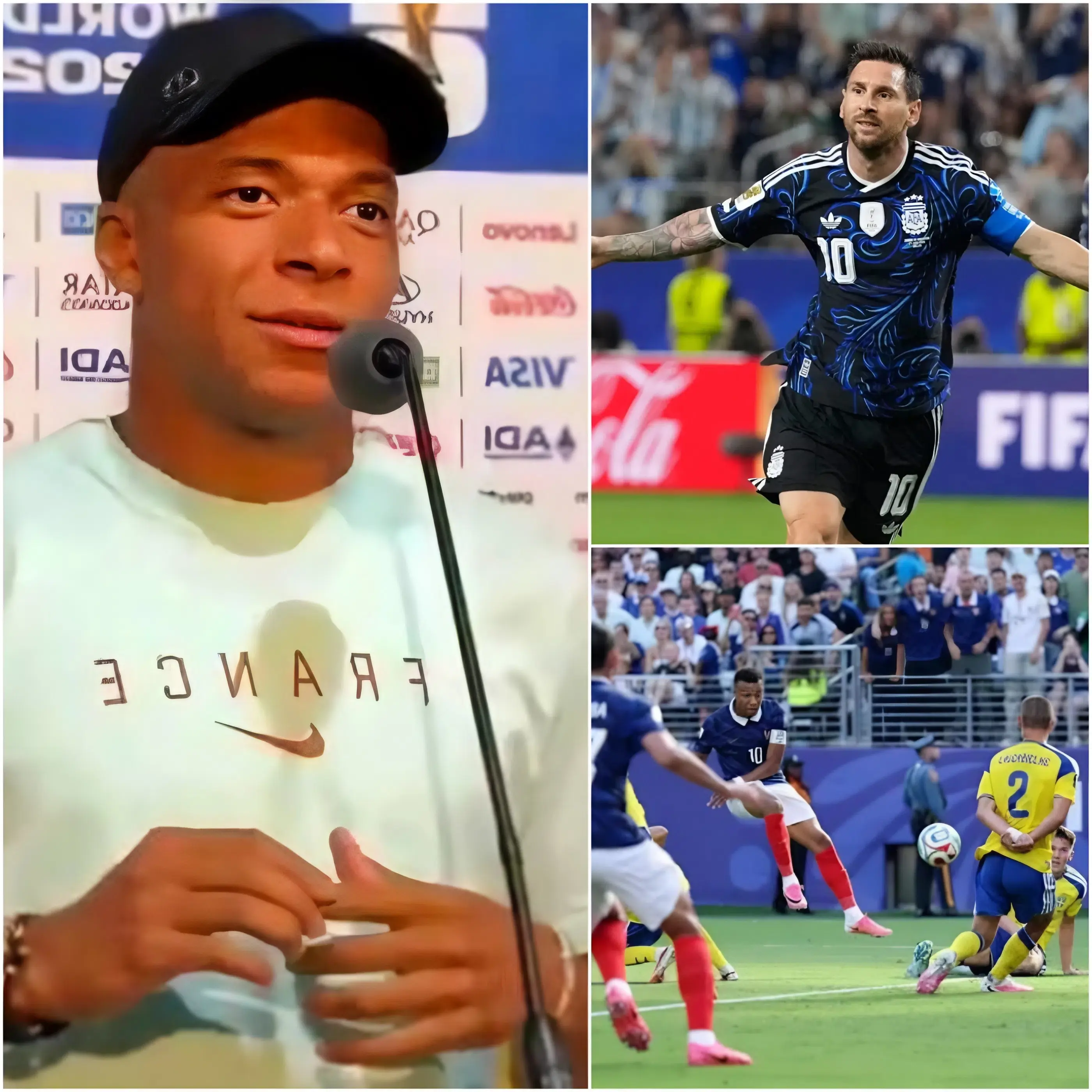
Yet, beneath the euphoria of a flawless performance and the historic milestones achieved on the pitch, a subtle undercurrent of anxiety is beginning to permeate the French camp and its global fanbase. The journey toward footballing immortality is rarely a straight line, and as the tournament intensifies, the weight of expectation may yet become France’s most formidable opponent.
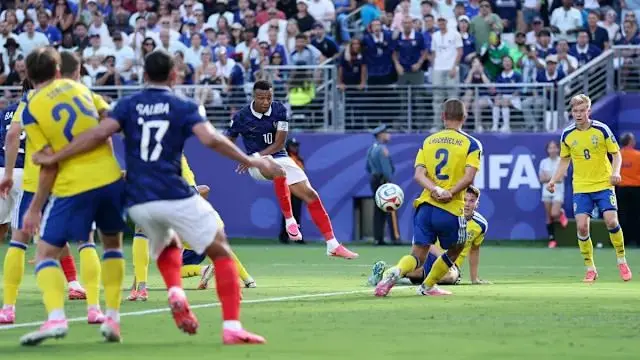
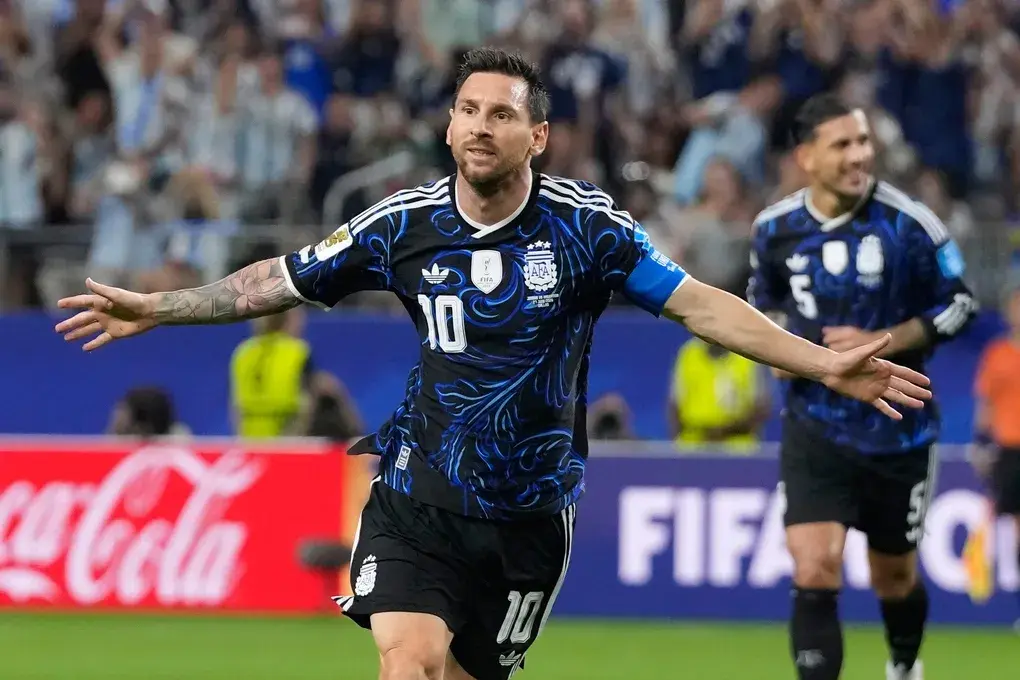
At the epicenter of this footballing earthquake is, predictably, Kylian Mbappé. With his breathtaking performance against the Scandinavians, the talismanic forward did not just guide his team forward; he explicitly etched his name deeper into the pantheon of the sport by equaling Lionel Messi’s storied record of six goals in a single World Cup campaign. To match such a milestone so early in the knockout phases is a testament to a player operating at the absolute peak of his powers.
Mbappé’s game against Sweden was a masterclass in modern forward play, combining devastating electric pace, immaculate spatial awareness, and a ruthlessness in front of goal that bordered on the robotic. When he is in this vein of form, tactical blueprints designed to contain him appear archaic, and opposition defenders are reduced to mere spectators of his brilliance.
However, it is precisely this stratospheric level of performance that introduces a delicate paradox for Les Bleus. Can any player, even one as physically gifted and mentally resilient as the Paris Saint-Germain superstar, maintain such an extraordinary standard all the way to the final? History is littered with the cautionary tales of teams that burned too brightly too early, peaking in the initial knockout rounds only to find their emotional and physical reservoirs depleted when the ultimate prize was within touching distance. The tournament structure is an uncompromising crucible, demanding sustained excellence over a grueling month of high-stakes football.
For France, the over-reliance on Mbappé’s genius is both their greatest asset and their most significant vulnerability. If he suffers a temporary dip in form, a minor physical ailment, or encounters a defensive system specifically engineered to nullify his specific threats, does Didier Deschamps’ side possess the tactical flexibility to adapt?
This question becomes even more pressing when analyzing the trajectory of the tournament. The round of 32, while expanding the global footprint of the World Cup, inevitably features matchups where tactical hierarchy is heavily lopsided. Sweden, for all their collective organization and traditional resilience, simply lacked the individual elite quality to disrupt the French machine. But the road ahead promises no such comfort. The path to the trophy will inevitably force France to collide with tactical behemoths and historical rivals who possess the technical micro-adjustments and defensive discipline required to stress-test this French team.
Nations with sophisticated midfields capable of starving Mbappé of service, or teams built on low-block defensive structures that deny him the open green spaces he thrives upon, are waiting in the wings. The quality of opposition will scale exponentially with each passing round, and the margin for error will shrink to non-existence.
Logically, the debate must also shift to the collective matrix supporting the star man. France’s 3-0 victory was not an isolated solo act; it was facilitated by a midfield engine room that dictated the tempo of the match and a defensive line that remained largely unbothered. Yet, the narrative of the tournament so far has been so heavily focused on the individual brilliance of their number ten that the collective tactical identity of the team occasionally goes unexamined. A truly balanced championship team requires multiple avenues of attack.
While players like Antoine Griezmann and the supporting frontline continue to execute their roles with disciplined precision, the goalscoring burden remains heavily asymmetric. For France to genuinely sustain this march to the final, the scoring sheet must diversify, ensuring that opponents cannot simply solve the French equation by attempting to solve the Mbappé problem alone.
Furthermore, the psychological burden of being the undisputed tournament favorites carries its own unique gravity. When a team looks as invincible as France did against Sweden, the external narrative shifts from “if” they will win to “how much” they will win by. Managing this media narrative and internal complacency is perhaps the most difficult task facing the French coaching staff. The pressure to uphold a standard of perfection can induce a subtle form of paralysis when a match does not go according to plan.
In the deeper rounds of a World Cup, a team will inevitably face moments of adversity—a sudden red card, an early conceded goal, or a VAR decision that alters the momentum of a match. It is in those specific moments of chaos, rather than the comfortable 3-0 victories, that the true character of a potential world champion is forged.
Ultimately, the spectacle in the round of 32 confirmed that France possesses the highest ceiling of any team in the tournament. Their tactical maturity, coupled with Mbappé’s historic scoring rate, makes them a terrifying prospect for any upcoming opponent. But a tournament is not won on paper, nor is it decided by matching historical records in the early winter of the competition. The true test of this French generation will be their ability to manage their emotional and physical pacing.
If Mbappé can preserve his current physical sharpness and tactical hunger through the upcoming tactical minefields, and if his supporting cast can elevate their output to match his historic stride, France may well cruise to another star on their jersey. Until then, the footballing world watches with bated breath, waiting to see if the upcoming challenges will expose a hidden flaw in the armor of the world’s most formidable footballing machine.
Given France’s current tactical dominance and Kylian Mbappé’s historic goalscoring form, do you believe their biggest threat in the remaining rounds will come from a specific elite opponent capable of neutralizing their system, or is their primary challenge managing their own internal physical and psychological pacing to avoid peaking too early before the final?