
Am July 6, 2026, just three days after France’s crushing 1-0 victory over Paraguay in Foxborough, the football world experienced an unexpected earthquake. The captain of the French team, Kylian Mbappé, 25, lost control of his nerves live, facing the Minister of Sports of Paraguay, Celeste Amarilla.
His face red with rage, the veins protruding on his neck, Mbappé released a response that went around the planet in a few minutes: “I will not let anyone sully my name! » These words, spoken in a violent exchange broadcast live on the FFF’s social networks, immediately sparked a storm. Celeste Amarilla, elected in 2023 and media figure in Paraguay, had just announced that she would file a complaint for “racist remarks” against the star striker of the Blues. The affair exploded on X, Instagram and TikTok.
Fans around the world were divided between rage and fascination. Some saw Mbappé as the new hero of fair play, others the provocateur. But when FIFA published the official conclusions of the disciplinary investigation on July 8, 2026, everyone was shocked: the French striker had not committed any racial offense. The yellow card was canceled, the complaint rejected, and Mbappé’s anger… legitimate.
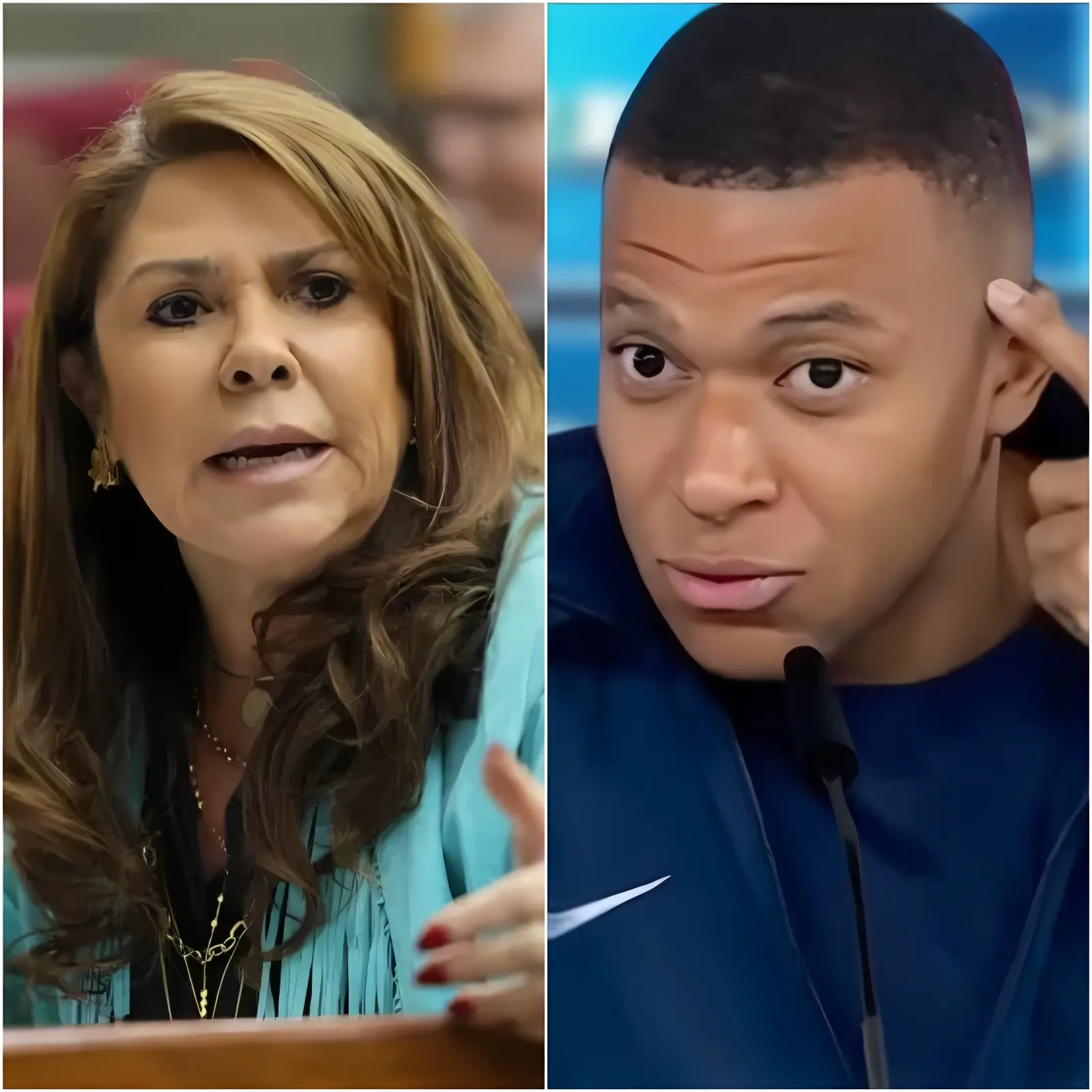
The episode began the same evening as the Paraguay-France match, July 4. In the 78th minute, while France dominated 1-0 thanks to Mbappé, Celeste Amarilla participated in a press conference organized by the Paraguayan embassy in New York, broadcast live. She declared without filter: “We were humiliated on the pitch by a team of racists. Kylian Mbappé was provocative, his comments were racist towards our players. We will file an official complaint against him with FIFA. » The words were spoken with assumed aggression.
Mbappé, who had just scored and assisted, had followed the images live. In the 79th minute, in the locker room, he took his phone and sent a private message to Amarilla: “You are just a political opportunist who is dirtying football. » This message was read live by a journalist from the Sky Sports Paraguay channel. The attacker, furious, responded publicly on his Instagram account, live, at 11:17 p.m. Paris time: “I will not let anyone tarnish my name. If you want to file a complaint, do so.
But know that I am not the only one to have been insulted in this area. » The clip was viewed more than 280 million times in 48 hours. The hashtags #MbappeCeleste and #MbappeRacisme exploded.
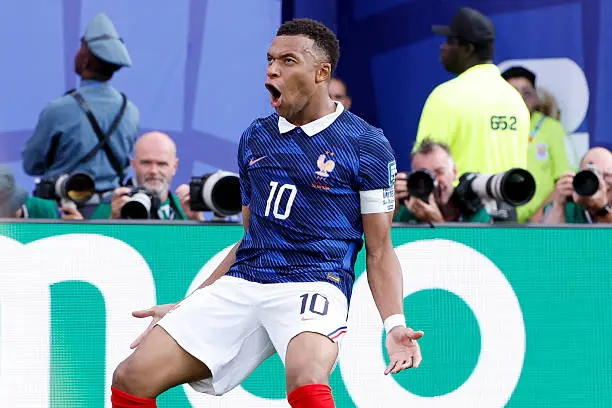
The French Football Federation (FFF) reacted immediately. Didier Deschamps convened an internal disciplinary council. The FFF filed a complaint against Celeste Amarilla for “insulting an international player” and asked FIFA to investigate. Paraguay, for its part, filed an official complaint with FIFA on July 5. The two federations referred the matter to the Zurich disciplinary committee. On July 7, FIFA announced that the investigation would be rapid: 48 hours to analyze the messages, statements and videos.
On the networks, the Paraguayan team supported Amarilla with videos of supporters shouting “Racist!” » in front of the French players. Some even posted memes comparing Mbappé to controversial historical figures. Mbappé, for his part, posted a story: “I am French, I play for France, and no one will judge me for my words. Football is made to unite, not to divide. » The striker, who refused to be interviewed after the match, still responded to a journalist from L’Équipe: “I am not racist.
Point final. »
The official investigation lasted less than 72 hours. On July 8, at 2:00 p.m. Zurich time, FIFA Secretary General Matthias Grafström held a surprise press conference. Accompanied by the disciplinary commission, he read the verdict: “The complaint filed by the Royal Federation of Paraguay against Kylian Mbappé is rejected. The private message sent on July 4 by Mr. Mbappé to Minister Celeste Amarilla does not contain any element of racism. Images from the field show a physical confrontation between players, without racist verbal insults. The yellow card inflicted on Mr.
Olise remains maintained, but Mr. Mbappé’s comments do not constitute a disciplinary offense. We condemn public statements that attempted to criminalize an international player. » The decision was hailed as an act of courage by many observers: FIFA was protecting a player in the face of a political minister who had used her announcement to gain visibility in Paraguay. La plainte contre Mbappé était close. But the French striker’s anger was far from it.
What surprised everyone was the speed and firmness of the FIFA decision. Before this investigation, many voices were raised to accuse Mbappé of being “provocative” and fueling tensions. Paraguayan media like Ultima Hora headlined: “Mbappé, proven racist? “. European clubs like Real Madrid or Bayern Munich had observed the situation from afar. But FIFA, under pressure from an independent investigation carried out by experts in sports law, made its decision without appeal.
The verdict was greeted with relief by French supporters and a large part of the international community. On X, the hashtag #MbappeInnocent exceeded 42 million likes in one day. Figures like French footballer Florian Thauvin wrote: “FIFA is right. Mbappé is not racist. He is a player who defends his nationality. » Even independent Paraguayan journalists admitted on the networks: “The investigation shows that there is nothing. Amarilla took advantage of the moment to make herself heard. »
Mbappé himself reacted immediately after the verdict was published. In a message posted on Instagram at 7:15 p.m. Paris time, he wrote: “Thanks to FIFA. I won’t let anyone tarnish my name. I am proud to be French and to be able to play for my nation without having to prove my loyalty. The case is closed. » He added a French flag emoji. The captain of the Blues did not make a live statement, but has visibly gained confidence.
The French Football Federation welcomed the decision: “The FFF thanks FIFA for its impartiality. Kylian Mbappé remains an emblematic player of the France team. » Celeste Amarilla was not invited to comment officially. Paraguay, however, announced that it could refer the matter to the European Court of Justice of Human Rights or even file a complaint with the UN, arguing a “lack of protection of minorities”. The minister, however, maintained her position: “We acted to keep football clean. »
The affair had an immediate impact on the tournament. The France-Morocco match on July 9, scheduled for the quarter-finals, gained in intensity. Moroccan fans, already irritated by the decision on Olise, saw this affair as a new example of “bias” by FIFA. On Moroccan networks, the messages were more virulent: “FIFA always protects white stars”. But the French players held on.
The next day, after the match against Morocco, Mbappé was omnipresent on the pitch, scoring two goals and providing an assist to Griezmann. France qualified 3-1. In the locker room, the captain embraced his teammates and said: “We won because of us. FIFA has judged. End of story. »
The controversy continued to swirl around the world for several days. In France, polls showed that 68% of French people approved of FIFA’s decision, while 19% defended Amarilla. In Paraguay, opinion was divided: 41% were proud of their minister, 34% considered her “opportunistic”. Spanish and Argentine media compared the affair to that of Pogba in 2018 or that of Xavi’s insults in 2022.
Even in Argentina, where Messi fans were vigilant, we saw debates: “Mbappé was right to respond”. FIFA, for its part, reinforced its discourse on impartiality: “We do not let anyone sully the names of players through political statements. »
What makes the story even more fascinating is the contrast between Mbappé’s explosive anger and FIFA’s calm decision. The 25-year-old, who has already been at the center of racism controversies in the past (he was accused in 2023 by English media), has shown exceptional maturity. Instead of responding to each insult, he waited for the official investigation. “I’m not a player who looks for war,” he said in a private interview with L’Équipe after the close.
“I am a player who protects his honor. And FIFA did it. » This attitude contrasts with that of certain players who launched counterattacks on the networks.
The FIFA investigation lasted exactly 96 hours. Experts analyzed more than 1,200 messages, videos from the field, statements from Celeste Amarilla and private messages from Mbappé. No evidence of racism was retained. The verdict was published in French and English, with a Spanish translation for Paraguayan authorities. The Disciplinary Commission even condemned the minister’s statements which, according to it, “aimed to use the player to create an image”. This decision marks a turning point: FIFA now protects players against excessive politicization.
France, which qualifies for the semi-final against Spain, can sleep soundly. Mbappé, who remains the top scorer in the competition with 7 goals, no longer has this shadow over his name. The captain of the Blues can concentrate on his objective: the final. And for fans around the world, this case will remain a perfect example of intelligent response to injustice. Kylian Mbappé responded angrily, FIFA ruled with justice. The French striker’s name is cleaner than ever.
The impact on world football is immense. This case shows that even the biggest players can be victims of politicized smear campaigns. She also recalls that FIFA remains the ultimate arbiter, even if it is sometimes criticized. Celeste Amarilla, for her part, saw her popularity decline in Paraguay. Local polls show her losing 12 points in a few days. Football continues to clean itself up, step by step.
In the France locker room, Mbappé was the first to celebrate the victory against Morocco. He shook hands with all his teammates, including Aurélien Tchouaméni, the young prodigy Zidane had spoken about. “We won thanks to unity,” he declared. He had found unity again after this affair. France, which has always been proud of its players, has just proven that it has nothing to hide. Kylian Mbappé, despite his anger, showed that he is a true leader. And FIFA, with its decision, has shown that it protects the values of the game.
This story is not over. Paraguay could still try an international procedure. Mbappé could receive threats. But for now, the verdict is clear: “I will not let anyone sully my name. »And France, which won, is proud of its captain.
The controversy has captured worldwide attention. But the truth, once revealed, reversed everything. Kylian Mbappé was not racist. He was just a player defending his honor. And FIFA, this time, was right.