
“I Won’t Stay Silent Any Longer”: Aleksandar Nikolov’s Stunning Confession Shakes Balkan Volleyball
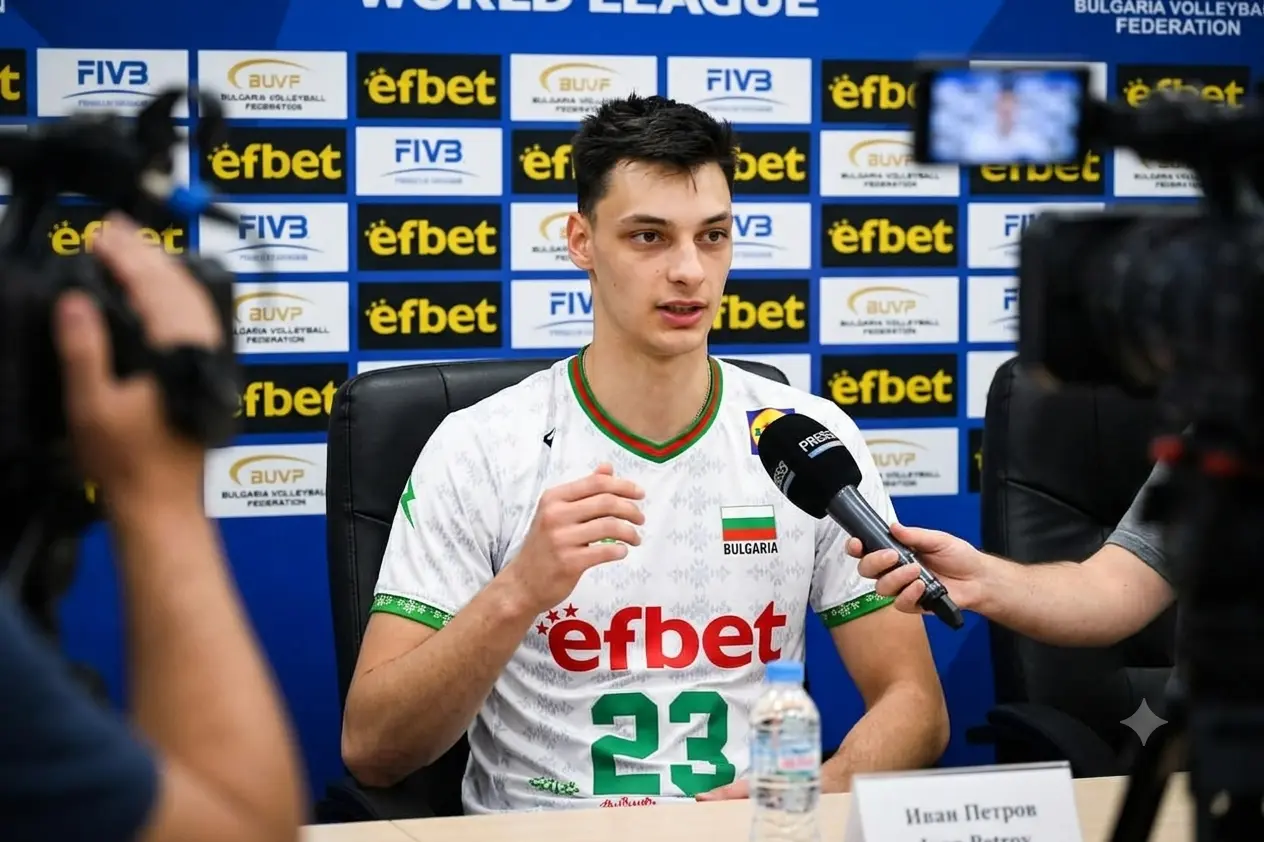
In a moment that stunned the international volleyball community, Aleksandar Nikolov, widely known as Alex, stepped into the spotlight with a statement that blurred the line between sport, politics, and personal truth. What began as a routine media appearance quickly transformed into a revelation few could have anticipated.
Holding a bouquet of red roses and wearing an enigmatic smile, Nikolov addressed the cameras in a mix of Bulgarian and English. His words were deliberate, almost theatrical: he had lost on the court, but won in life. The room, initially puzzled, leaned in closer.
Then came the announcement that ignited the first wave of shock. Nikolov revealed that the woman he loved was none other than Hena Kurtagić, Serbia’s rising defensive powerhouse. In a sport defined by national pride, the revelation alone was enough to stir controversy.
Gasps echoed across the room as journalists scrambled to process the implications. A Bulgarian star publicly declaring love for a Serbian athlete carried symbolic weight, given the complex historical and political undertones between the two nations. Yet, the most astonishing twist was still to come.
With composure that bordered on unsettling calm, Nikolov dismantled the romantic narrative he had just constructed. “Do you think this is a Romeo and Juliet romance?” he asked rhetorically. The pause that followed felt heavy, as if the room instinctively sensed a deeper truth.
What he revealed next silenced every whisper. Nikolov admitted that his initial approach to Kurtagić had not been motivated by affection, but by strategy. Ahead of the 2025 World Championship final, he had been tasked by Bulgarian coaching staff to gather intelligence on Serbia.

The method, as he described it, was calculated and ethically ambiguous. Kurtagić, a young and promising player at the time, was seen as approachable. Nikolov was instructed to build a connection, to gain insights that could potentially influence the outcome of one of volleyball’s biggest stages.
This confession raised immediate questions about the boundaries of sportsmanship. While intelligence gathering is not unheard of in elite competition, the personal nature of Nikolov’s assignment introduced a moral complexity that resonated far beyond volleyball courts and locker rooms.
However, the story did not unfold as planned. According to Nikolov, Kurtagić quickly recognized his intentions. Rather than reacting with anger or betrayal, she responded with disarming clarity and humor. Her remark—questioning whether Serbia would ever reveal tactics so easily—shifted the dynamic between them.
Their interactions, initially rooted in deception, gradually evolved into something more genuine. Meetings in Italy, particularly during Nikolov’s visits to watch Kurtagić compete for Vero Volley Milano, became moments of honest conversation rather than covert inquiry.
It was in these exchanges that the foundation of their relationship was built. They spoke not of tactics or matches, but of shared experiences—injuries, expectations, and the unique pressures of growing up in the Balkans, where sports often intersect with national identity and political narratives.
Kurtagić, when she eventually joined the conversation, offered a perspective that reframed the entire story. Her voice was steady, her words carefully chosen. She did not deny the unusual beginnings of their relationship, but instead emphasized what followed: honesty, accountability, and emotional courage.
“I love Alex not because he is Bulgarian,” she stated firmly, dismantling any notion that nationality defined her feelings. Instead, she pointed to his willingness to admit his mistake publicly—a rare act in a world where reputation often takes precedence over truth.

Her admission carried its own weight. In Serbia, she revealed, she had faced criticism and even accusations of betrayal. Being romantically involved with an athlete from a perceived rival nation placed her under scrutiny that extended beyond the sport itself.
Yet, Kurtagić remained resolute. Love, as she described it, does not operate within the confines of borders or historical grievances. It exists independently, shaped by individual choice rather than collective expectation. Her words resonated as both a دفاع and a declaration.
The broader implications of their story are difficult to ignore. In a region where history often casts a long shadow, Nikolov and Kurtagić’s relationship challenges entrenched narratives. It raises questions about identity, loyalty, and the role of athletes as both competitors and human beings.
For the volleyball community, the revelation also prompts reflection on the ethics of competition. Nikolov’s admission of being used as an informal “spy” introduces a controversial dimension to pre-match preparation. It forces governing bodies and teams to reconsider the limits of strategic behavior.
At the same time, the human element of the story cannot be overshadowed. What began as a calculated maneuver transformed into a relationship built on mutual understanding. The transition from manipulation to authenticity is, perhaps, the most compelling aspect of this narrative.
Observers have noted that the timing of Nikolov’s confession is significant. By choosing to speak openly now, he risks criticism from multiple sides—fans, officials, and even former teammates. Yet, his decision suggests a desire to reclaim his own narrative before others define it for him.
Kurtagić’s support further underscores the strength of their bond. By standing beside him and sharing her perspective, she reinforces the idea that their relationship is not a scandal to be hidden, but a reality to be acknowledged. Together, they present a united front.
As reactions continue to pour in from across the sports world, one thing remains clear: this is more than a love story. It is a moment that exposes the complexities of modern sport, where personal lives, ազգային identities, and professional ambitions often collide.
Whether viewed as controversial, inspiring, or somewhere in between, the story of Aleksandar Nikolov and Hena Kurtagić will undoubtedly leave a lasting impression. It challenges audiences to look beyond the surface, to question assumptions, and to recognize the humanity behind the headlines.
In the end, Nikolov’s opening statement—his refusal to remain silent—may define his legacy as much as any performance on the court. By speaking out, he has not only revealed a personal truth but also sparked a broader conversation that extends far beyond volleyball.