

The history of English football at the international level is often viewed through a lens of perpetual anxiety, a narrative constructed around dramatic penalty shootout heartbreaks and a lingering sense of unfulfilled potential. Yet, amidst the historical turbulence that has defined the Three Lions on the world stage, there remains an island of absolute statistical certainty, a peculiar record that continued to hold firm in the high stakes of the World Cup knockout rounds.
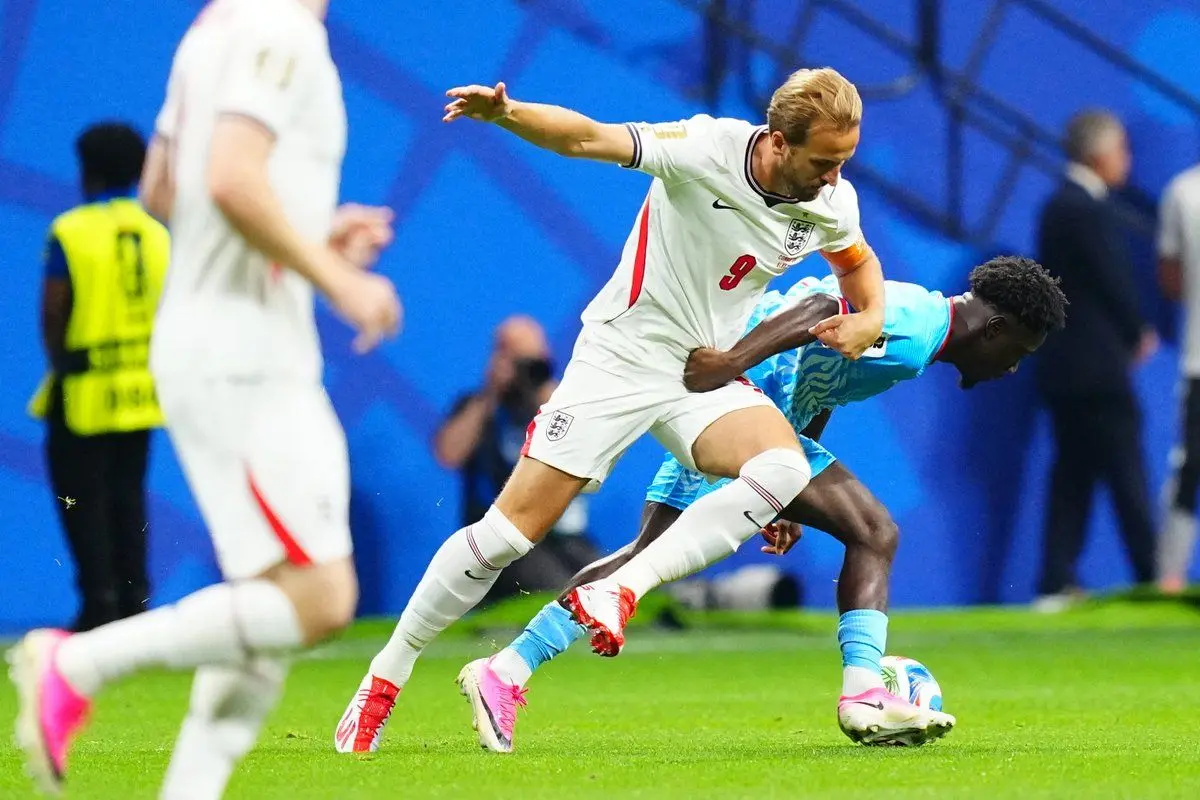
With a hard-fought 2-1 victory over the Democratic Republic of Congo, England extended an immaculate historical trend: they have never lost to an African nation in the single-elimination stages of the tournament. By adding the Leopards to a historical ledger that already featured the dramatic triumphs over Cameroon in 1990 and Senegal in 2022, Gareth Southgate’s men ensured that history repeated itself. However, beneath the surface of this mathematically perfect record lies a much more complicated reality, one that suggests the gap between statistical tradition and tactical evolution is narrowing faster than the English football establishment would care to admit.

To understand the weight of this latest triumph, one must look past the binary simplicity of the final scoreline. A 2-1 victory in a World Cup knockout match sounds, on paper, like a controlled, professional display by an elite European power managing the tempo of a major tournament. In reality, the encounter was an grueling, exhausting affair that pushed the English tactical framework to its absolute limits.
The Democratic Republic of Congo did not arrive on the pitch merely to participate in an English milestone; they brought a brand of athletic, highly structured transition football that exposed the deep-seated structural vulnerabilities within Southgate’s setup. For large stretches of the match, particularly during a frantic and disorganized first half, the English midfield looked overrun, struggling to cope with the physical intensity and spatial awareness of their African counterparts. The victory was ultimately secured through moments of individual technical brilliance and the sheer depth of talent available on the English bench, rather than a cohesive, dominant tactical masterclass.
This recurring pattern of scraping through matches on the back of individual star power rather than structural superiority is precisely what fuels the central debate surrounding this English generation. The historical reference points provide an illuminating context. When Bobby Robson’s England faced Cameroon in the quarter-finals of the 1990 World Cup in Italy, they were pushed to the absolute brink, needing two Gary Lineker penalties in extra time to escape with a 3-2 victory against a revolutionary African side.
Decades later, in Qatar 2022, the 3-0 scoreline against Senegal looked comfortable on the macro level, but the opening thirty minutes of that match saw Jordan Pickford forced into critical saves as the African champions exploited gaps in the English defensive transition. The recent clash with the DR Congo followed a remarkably similar script, proving that while England consistently possesses the psychological resilience and individual quality to navigate these specific tactical minefields, they rarely do so with the serene authority expected of genuine tournament favorites.
This brings the footballing world back to the inevitable, polarizing figure at the helm of the national team. Gareth Southgate has undeniably been the most statistically successful England manager since Sir Alf Ramsey, guiding the nation to semi-finals, finals, and deep tournament runs with a consistency that his high-profile predecessors could only dream of.
Yet, despite this impressive resume, the fundamental question remains unanswered: does Southgate possess the tactical dynamism and progressive vision required to elevate this extraordinarily talented group of players into world champions? The victory over the DR Congo, while preserving his immaculate record in these specific matchups, served as a microcosm of the Southgate dilemma. His critics will argue that his innate conservatism and rigid adherence to a cautious double-pivot midfield system paralyze the creative instincts of a generation blessed with unprecedented attacking wealth.
The apparent reluctance to make proactive tactical adjustments during moments of opposition dominance allows teams like the DR Congo to dictate the emotional rhythm of the game, turning what should be controlled victories into frantic exercises in survival.
Conversely, Southgate’s defenders will point to the undeniable reality of tournament football, where style points are irrelevant and longevity is measured solely by advancement. Under his stewardship, England has developed an admirable tournament culture, a collective psychological armor that prevents them from panicking when a match veers off script. The ability to absorb immense pressure, manage the game state, and execute clinical moments of quality when it matters most is a trait that defines successful tournament teams.
In this light, the difficult nature of the victory over the DR Congo can be interpreted not as a failure of tactics, but as a triumph of character. The team found a way to win a football match when they were far from their fluid best, a characteristic that historically separated champions from mere contenders.
However, the road ahead grows exponentially steeper, and the luxury of relying on individual rescue acts or historical precedents will soon expire. As the tournament progresses into the quarter-finals and beyond, England will inevitably collide with elite tactical superpowers—nations that possess not only the physical intensity of the DR Congo but also the world-class technical precision to punish the structural flaws that Southgate has yet to fully resolve. A passive midfield or a defensive line that drops too deep in an attempt to protect a slender lead will be ruthlessly exploited by the likes of France, Brazil, or Spain.
The margin for error shrinks to near-zero, and the tactical chess match becomes a battle of micro-adjustments where a manager’s reactive capabilities are thoroughly tested.
Ultimately, the extension of England’s perfect record against African nations in the World Cup knockout rounds is a milestone worthy of respect, a testament to the country’s enduring ability to navigate the unique pressures of international tournament football. But if this tournament has taught us anything, it is that history offers no guarantees for the future. The victory in this grueling encounter has bought Southgate time and kept the national dream alive, but it has done little to quiet the underlying skepticism surrounding his ceiling as a tactician.
The English public and the footballing world at large are left watching a familiar drama unfold, wondering if this historic victory was a stepping stone toward ultimate glory, or merely another temporary stay of execution before a familiar tactical limitation cuts the journey short.
Considering England’s historically perfect record against African nations in World Cup knockout rounds alongside their visible struggles to control the tactical rhythm against the Democratic Republic of Congo, do you believe Gareth Southgate’s pragmatic, tournament-tested approach is ultimately the safest and most logical path to winning a major trophy, or does his systemic conservatism represent the primary barrier preventing this highly talented English generation from achieving its true world-class potential?