
The complex tapestry of international football is woven with narratives of redemption, historical rivalries, and the unpredictable nature of tournament pacing. As the World Cup transitions into the unforgiving territory of the knockout phases, the upcoming round of 32 clash between Croatia and Portugal presents an intriguing study in contrasting momentums. On one side stands a buoyant Croatian team, a nation that has once again defied pre-tournament skepticism by navigating a treacherous group stage and orchestrating the high-profile elimination of a formidable Dutch side.
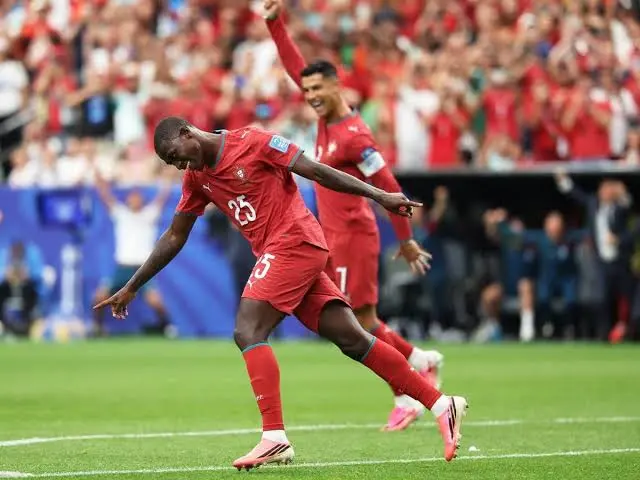
On the other side sits Portugal, a traditional powerhouse that has stuttered into the elimination rounds, leaving a trail of tactical questions and unresolved anxieties in its wake. The central question dominating the build-up to this highly anticipated encounter is simple yet profound: can Croatia replicate their group-stage giant-killing act against a wounded Portuguese Seleção, or will the weight of knockout history and individual genius spark the Iberian giants into life?
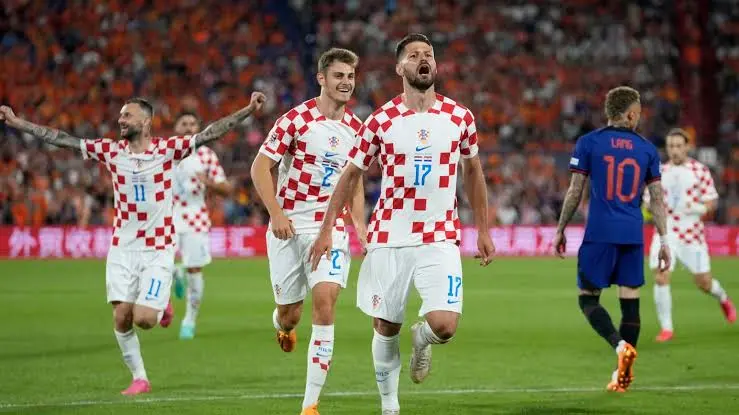
To appreciate the psychological dynamics of this matchup, one must first look at the contrasting paths both nations took to reach this stage. Croatia’s journey has been characterized by the tactical clarity and collective resilience that have become the hallmarks of their golden generation. Eliminating the Netherlands in the group stage was not merely a statistical achievement; it was a psychological statement of intent. It proved that despite a transitioning squad and aging core, the Vatreni still possess the tactical intelligence to dismantle elite European opposition.
This confidence was further solidified by a mature, calculated 2-1 victory over an athletic and energetic Ghana side. Croatia enters the round of 32 playing with a sense of collective harmony, where every player understands their structural role, and the midfield engine continues to dictate the tempo of matches with hypnotic efficiency.
Portugal’s narrative, conversely, is shrouded in ambiguity. The Seleção entered the tournament as one of the heavy favorites, blessed with a squad depth that is the envy of most international managers. Yet, their group-stage campaign was less than impressive, characterized by a lack of cohesion and a frustrating inability to convert possession into definitive victories. Consecutive draws against the Democratic Republic of Congo and Colombia exposed a team seemingly caught between two identities. At times, Portugal looked overly cautious, recycling possession slowly and allowing their opponents to organize low-block defensive structures.
At other times, they appeared vulnerable to rapid counter-attacks, struggling to manage defensive transitions when their aggressive press failed to materialize. This sluggish start has generated immense external pressure, creating a sense of vulnerability around a team that has yet to find its collective rhythm.
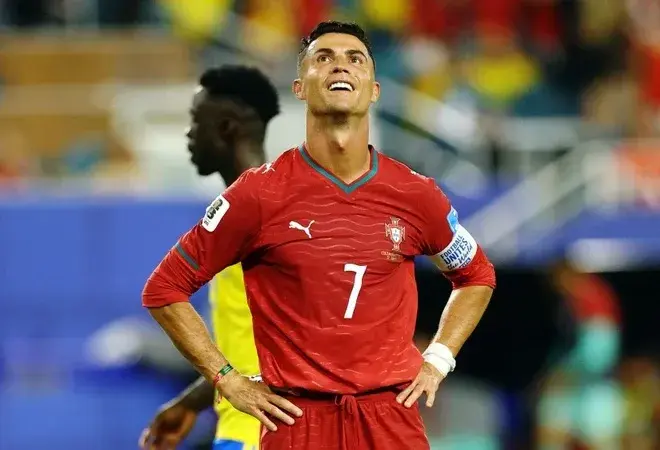
Naturally, any discussion regarding Portugal’s fortunes inevitably converges on the singular, towering figure of Cristiano Ronaldo. As the talismanic forward prepares for what is undeniably the twilight of his legendary international career, his role within this specific tactical setup has become a lightning rod for debate among fans and analysts alike. The primary source of anxiety for the Portuguese faithful is whether Ronaldo can still summon the match-winning brilliance that defined his prime in a fixture of this magnitude.
During the group stage, his performances mirrored the team’s collective frustration; he was often starved of quality service, isolated between opposition center-backs, and unable to impose his formidable will on the game state. In the knockout rounds, where the margin for error shrinks to nothing and matches are decided by microscopic details, Portugal desperately needs their captain to not only occupy space but to be the clinical focal point that transforms their possession into goals.
However, viewing Portugal solely through the lens of Ronaldo’s individual form does a disservice to the broader tactical chess match that will unfold against Croatia. The true battle will be contested in the midfield engine room, an area where Croatia historically excels and where Portugal has recently looked disconnected. The Croatian midfield trio operates with a telepathic understanding, utilizing short, press-resistant passing sequences to frustrate opponents and control the emotional temperature of the match. For Portugal to disrupt this rhythm, their technical midfielders must elevate their defensive work rate and show greater urgency in possession.
If Portugal allows Croatia to dictate the tempo and monopolize the ball, they risk being slowly choked out of the game, much like the Netherlands were in the group phase.
Logically, the underwhelming group-stage performance of Portugal could also be interpreted through a more pragmatic lens. History shows that teams that breeze through the group stage with maximum points often peak too early, failing to find another gear when they encounter genuine adversity in the knockout rounds. Conversely, a difficult, grinding group stage can act as a crucible, forcing a team to confront its flaws and develop a tactical pragmatism necessary for survival. Portugal’s draws against resilient South American and African opposition have tested their defensive resolve and forced them to play under duress.
If the coaching staff has utilized the intervening days to fix the spacing issues between the midfield and the attack, this battle-tested version of Portugal could prove to be a far more dangerous opponent than a team that has cruised through unchallenged.
Croatia, despite their immense confidence, must also guard against the psychological trap of complacency. The elimination of the Netherlands was a monumental effort that required maximum emotional and physical output. Replicating that level of intensity against a wounded Portugal side is an immense physical challenge, particularly for a squad that relies heavily on veteran leadership. If Croatia expects Portugal to be passive based on their group-stage footage, they may be caught off guard by a Seleção side that historically thrives under the siege mentality generated by domestic criticism.
The match will likely be decided by which team adapts quicker to the specific pressures of the knockout environment, where tactical experimentation ends and execution becomes absolute.
Ultimately, this round of 32 clash represents a fascinating collision of footballing philosophies and tournament trajectories. Croatia enters with the momentum of a giant-killer, possessing the structural blueprint and collective confidence to systematically dismantle another European elite. Portugal arrives burdened by expectation and hampered by their own early-stage inconsistency, yet they remain a sleeping giant possessing an unparalleled ceiling of individual talent. Whether Ronaldo can produce one more iconic international chapter or whether Croatia’s collective brotherhood will once again reign supreme remains to be seen.
What is certain, however, is that the winner of this encounter will emerge not just as a round of 16 participant, but as a battle-hardened contender capable of going the distance.
Given Portugal’s underwhelming group-stage performances and Croatia’s tactical mastery in eliminating top-tier European opposition like the Netherlands, do you believe Portugal’s success in this knockout match depends entirely on Cristiano Ronaldo delivering a vintage individual performance, or is their progression more dependent on a complete tactical restructuring of their midfield to counter Croatia’s collective control?