
The integrity of professional rugby league often hinges on the thin margins of officiating, where split-second decisions can redefine the trajectory of a season. In the high-stakes environment of the National Rugby League (NRL), the interplay between on-field referees and the technological oversight of The Bunker has become the focal point of intense scrutiny. Recently, the rugby league community found itself engulfed in a debate surrounding a contentious play involving Newcastle Knights center Bradman Best. Following days of mounting tension and vocal criticism from supporters, pundits, and clubs alike, the NRL’s officiating hierarchy has broken its silence.
The official statement issued by the NRL Referees Management not only addresses the specific mechanics of the incident involving Best and Dolphins winger Jack Bostock but also serves as a broader acknowledgement of the systemic pressures currently facing the officiating team.
The incident in question, which occurred during a pivotal moment of the match, saw Bradman Best contesting a high ball. In the live broadcast, the immediate assessment suggested that Best had successfully navigated the contest, leading to a try that shifted the momentum of the game. However, the subsequent intervention by The Bunker—the centralized video review hub—resulted in an intervention that overturned the initial on-field decision. The rationale provided at the time centered on a suspected infringement, yet the visual evidence remained frustratingly inconclusive to many observers.
As the days progressed, the conversation shifted from the result of the match to the reliability of the process itself.
In the official briefing, the NRL Referees Management addressed the confusion with a candid assessment that rarely emerges in the immediate aftermath of a round of competition. The statement conceded that upon deeper review and frame-by-frame analysis, the evidence indicated that the ball had in fact made contact with the fingertips of Jack Bostock before the contest for the ball between him and Best was fully resolved. This acknowledgment directly contradicts the interpretation used by The Bunker officials on the night.
The statement explicitly labeled the intervention as a significant error in judgment, noting that the threshold for overturning an on-field referee’s decision had not been met. This admission of a “serious and detrimental error” underscores the precarious nature of relying on video technology when the subjective interpretation of a match official supersedes the empirical evidence available on the screen.
Graham Annesley, the Head of Football at the NRL, stepped forward to provide the final word on the matter, offering a perspective that sought to balance institutional accountability with the human element of the game. Annesley is no stranger to the spotlight, often serving as the primary defender of the officiating department during periods of controversy. However, in this instance, his tone was one of measured reflection rather than reflexive defense. Addressing the media, Annesley confirmed that the decision made by The Bunker was flawed, not only in its outcome but in the methodology applied during the review.
He emphasized that the officials involved failed to adhere to the core directive of “clear and conclusive” evidence, which is the cornerstone of the video refereeing system.
The decision provided by Annesley does not, of course, alter the final score of the match, nor does it provide a path to restitution for the team disadvantaged by the call. Instead, the finality of his statement serves as a diagnostic tool for the NRL’s officiating department. Annesley noted that the frustration felt by fans is legitimate, as the sport’s credibility relies on a consistent and transparent application of the laws. He highlighted that while technology is intended to assist, it cannot entirely replace the intuition of a well-positioned on-field referee.
The controversy surrounding the Bradman Best incident has reignited the conversation regarding the degree of autonomy given to The Bunker and whether the constant desire for perfection through technology is, in fact, complicating the game’s flow and fairness.
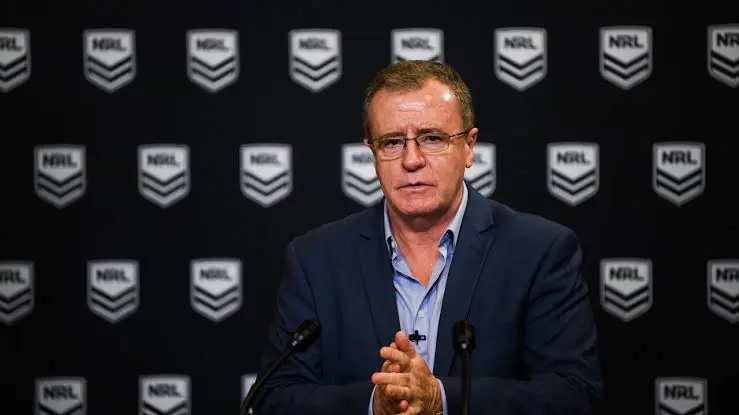
The fallout from this incident extends beyond a single match. It has become a case study for the evolving relationship between the NRL and its spectators. Fans are increasingly sophisticated in their understanding of the rules, often armed with the same replays and angles as the officials themselves. When there is a disparity between the popular perception of an event and the official ruling, the legitimacy of the entire competition is questioned. Annesley’s intervention was designed to restore a sense of order and to assure the public that the governing body is not blind to the frustrations on the terraces.
Yet, it also raises questions about how the sport manages the psychological toll on officials who are tasked with making impossible decisions in seconds.
The argument for human error in sport has always been a staple of rugby league culture; the “swings and roundabouts” theory suggests that over the course of a season, decisions generally balance out. However, as the game becomes more commercialized and the stakes for finals qualification rise, the tolerance for these errors has diminished significantly. By publicly admitting to the error, the NRL is attempting to engage in a more transparent dialogue, hoping to pivot from a culture of secrecy to one of accountability.
Annesley noted that there would be a rigorous review of the protocols used by The Bunker staff involved in that specific match, emphasizing that continuous education and refinement of the review process are the only ways to prevent a recurrence of this specific oversight.
As the dust settles, the focus shifts to how these lessons will be implemented in the coming rounds. The NRL is under immense pressure to streamline the decision-making process, ensuring that the game remains watchable while maintaining the highest standards of fairness. The Bradman Best incident will likely be remembered not just as a missed call, but as a turning point in how the sport processes its officiating failures. It reinforces the reality that in a game of physical collision and immense speed, perfection is an elusive target.
The goal, therefore, is not to eliminate all controversy—which may be an impossibility—but to ensure that the process by which those decisions are reached is defensible and rooted in the actual laws of the game.
The path forward requires a delicate balancing act. If the sport overcorrects by increasing the frequency of reviews, it risks losing the spectacle of the game; if it under-corrects, it loses the trust of those who keep the game thriving. Graham Annesley’s leadership in this situation suggests a preference for owning the mistake and moving forward, rather than doubling down on a flawed interpretation. This approach is perhaps the only way to maintain the integrity of the competition in an era where every angle is analyzed, debated, and criticized in real-time.
Whether this brings the level of consistency that supporters are demanding remains to be seen, but the admission of error is the necessary first step toward any meaningful reform of the current system.
As the NRL continues to navigate these complexities, the discourse between fans, officials, and administrators must remain constructive. The sport of rugby league is defined by its intensity and its commitment to the spirit of the contest, and that spirit must be reflected in the way the game is managed from the top down.
In light of Graham Annesley’s admission regarding the systemic failure in The Bunker during this incident, do you believe that the NRL should reduce the frequency and scope of video interventions to return more authority to the on-field referees, or does the modern professional game necessitate even greater reliance on technology to ensure accuracy, regardless of the impact on the game’s flow?